Best Tools to Promote Contemporary Art Exhibitions Online (2026)
Last updated: September 24, 2026
Promote contemporary art exhibitions online: Meta ads, email, Instagram, PR. Pair paid reach with MOCKLIO room stills and cinematic reels so the show looks owned before opening night.
Posted by
 Basti
BastiRelated reading
The Art Content Loop: Reel, Carousel, Captions (2026)
One artwork becomes a 10-second Reel, a 12.5-second cinematic cut, a carousel, and captions. The weekly art content system MOCKLIO ships in one loop.
Commercial Gallery Instagram: Catalogue vs Opening
Split commercial gallery Instagram into MOCKLIO catalogue hangs and real opening footage. One roster cadence across locations; camera stays for people.
How Galleries Create Instagram Content Without a Videographer
Gallery Instagram without a videographer: batch MOCKLIO cinematic reels from artwork photos, keep event filming for openings, and scale with Atelier or Gallery plans.
Short answer: The best tools to promote contemporary art exhibitions online in 2026 are paid and PR surfaces (Meta Ads, email platforms, Artsy-adjacent discovery, Instagram organic + boost) fed by sharp exhibition visuals. Do not confuse promotion channels with content production. MOCKLIO builds the room mockups, reels, and stills that those channels run. Meta, your ESP, and partner platforms buy the attention.
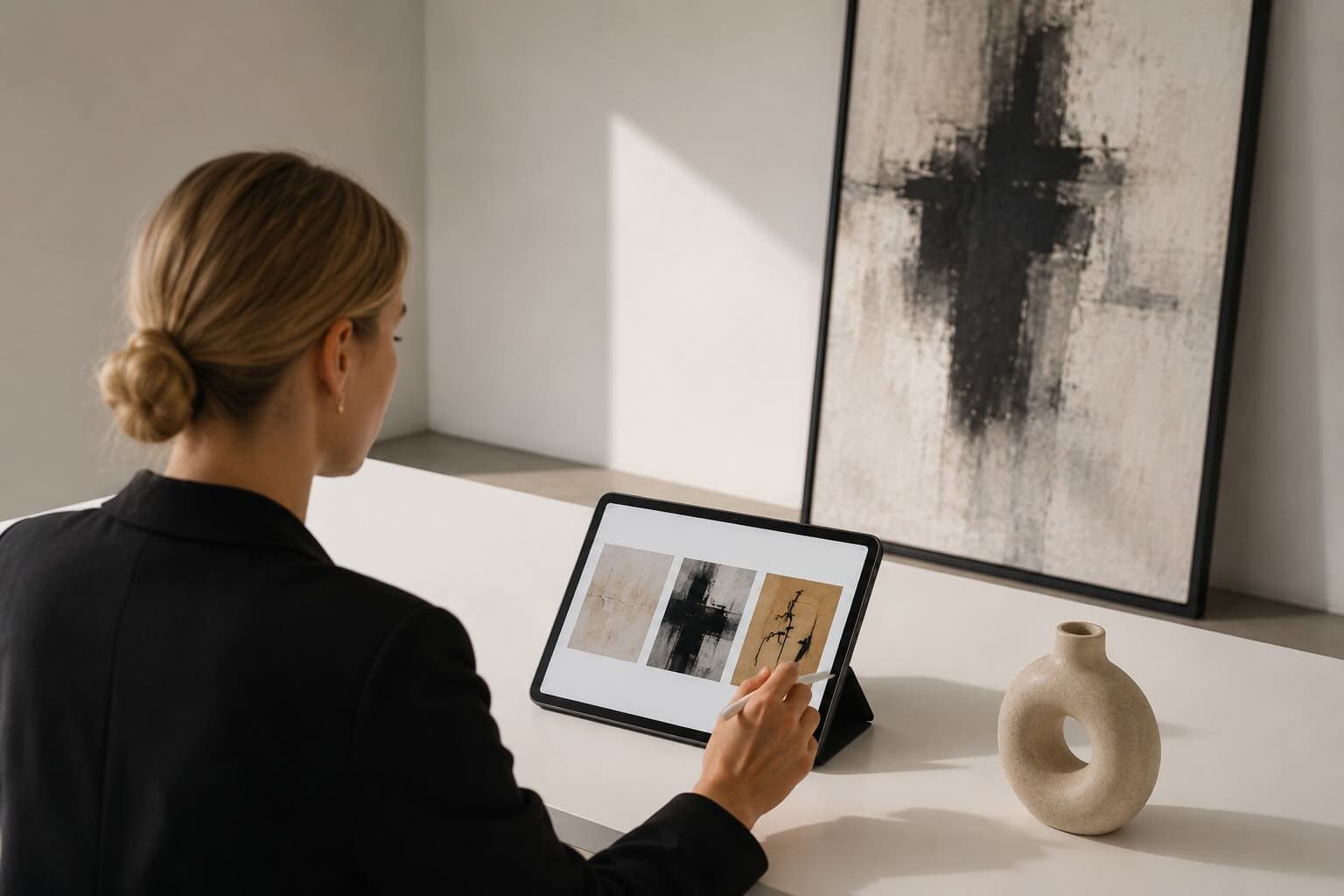
Exhibition marketing fails in two opposite ways. Teams either buy ads with weak JPEGs, or they obsess over content packs and never book media. Art Basel and UBS found 59% of collectors bought art online in 2024 (Art Basel and UBS). The online market is about $10.5B. Ninety-three percent of buyers say visuals matter. Promotion tools only work when the creative deserves the spend.
Instagram Reels see roughly 200 billion daily plays. Buffer's 2025 analysis of 4M+ posts found Reels get 125% more reach than single images (Buffer, Instagram statistics). Carousels sit near 1.92% engagement for diligence. Landing pages with video convert about 80-86% better (DigitalApplied). Wyzowl reports 89% say video quality builds trust. Professional visuals correlate with +10-33% conversion. Your exhibition stack needs channels and creative that meet those bars.
This article is deliberately not another guide to producing exhibition Reels. Gallery exhibition content and the gallery content pack already own asset production. Here we rank where those assets go when you want attendance, VIP previews, and secondary-market awareness.
Key takeaways
- Promotion stack = Meta + email + Instagram + Artsy-adjacent / partner platforms, fed by MOCKLIO visuals.
- Art Basel/UBS: 59% collectors bought online (2024); market ~$10.5B; 93% say visuals matter.
- Reels +125% reach (Buffer); ~200B daily plays; carousels ~1.92% engagement; page video +80-86%.
- Separate content production (MOCKLIO / content pack) from paid/PR distribution.
- Boost proven organic creative; never launch ads on flat install shots alone.
How Should Galleries Use Meta Ads for Exhibition Promotion?
Meta Ads Manager remains the default paid lever for opening nights, VIP hours, and city-radius awareness. Run traffic or engagement campaigns to an exhibition landing page, not to a generic homepage. Creative should be the cinematic room reel or a carousel of hung works with dates and RSVP. Static white-wall grids waste CPM.
Geo-target the city plus collector lookalikes from past RSVP or purchaser lists when you have pixel data. Keep budgets honest: prove creative organically first, then boost. Buffer's +125% Reel reach finding still applies to organic; paid should amplify winners, not invent them.
Galleries that sent us soft phone photos for "just a quick boost" burned budget teaching the algorithm that blurry installs are their brand. After switching to MOCKLIO stills and 10s reels of key works, the same media buy produced RSVPs that named specific pieces. Creative quality is a media strategy.
Retarget site visitors with a reminder carousel three days before opening. Use the same scene as the hero email. Mismatch between ad and landing page kills the 80-86% video advantage classic web studies document.
Which Email Tools Belong in an Exhibition Promo Stack?
Use whatever ESP already has your collector list and clean deliverability: Mailchimp, Klaviyo, Campaign Monitor, Resend-powered custom stacks, or gallery CRMs with broadcast mail. The tool matters less than segmentation: VIPs, past buyers of the artist, local RSVPs, press. One blast to everyone is how unsubscribes happen.

Hero with a hi-res room still or a linked reel on the exhibition page. Professional visuals (+10-33% conversion correlation) matter in inboxes too. Keep one CTA: RSVP, request catalogue, or book private view. Secondary links to Artsy or partner listings can sit below.
Sequence: save-the-date (still), preview reel (7 days out), opening reminder (48 hours), thank-you + remaining works (day after). Four emails, same visual system. Artists without a gallery should still run this sequence from their own list when they stage a pop-up or dual show.
Measure click-to-open and RSVP rate, not just sends. If opens are fine and RSVPs are flat, the landing page or CTA is the leak. If opens are weak, subject lines and from-names need work before you blame Meta for everything.
How Do Instagram Organic and Boosts Fit Exhibition PR?
Instagram is still the public square for contemporary openings. Lead with Reels of key works in room context (200B daily plays is not a meme, it is distribution). Follow with carousels for checklist info: dates, address, hours, artists. Captions carry logistics when sound is off.
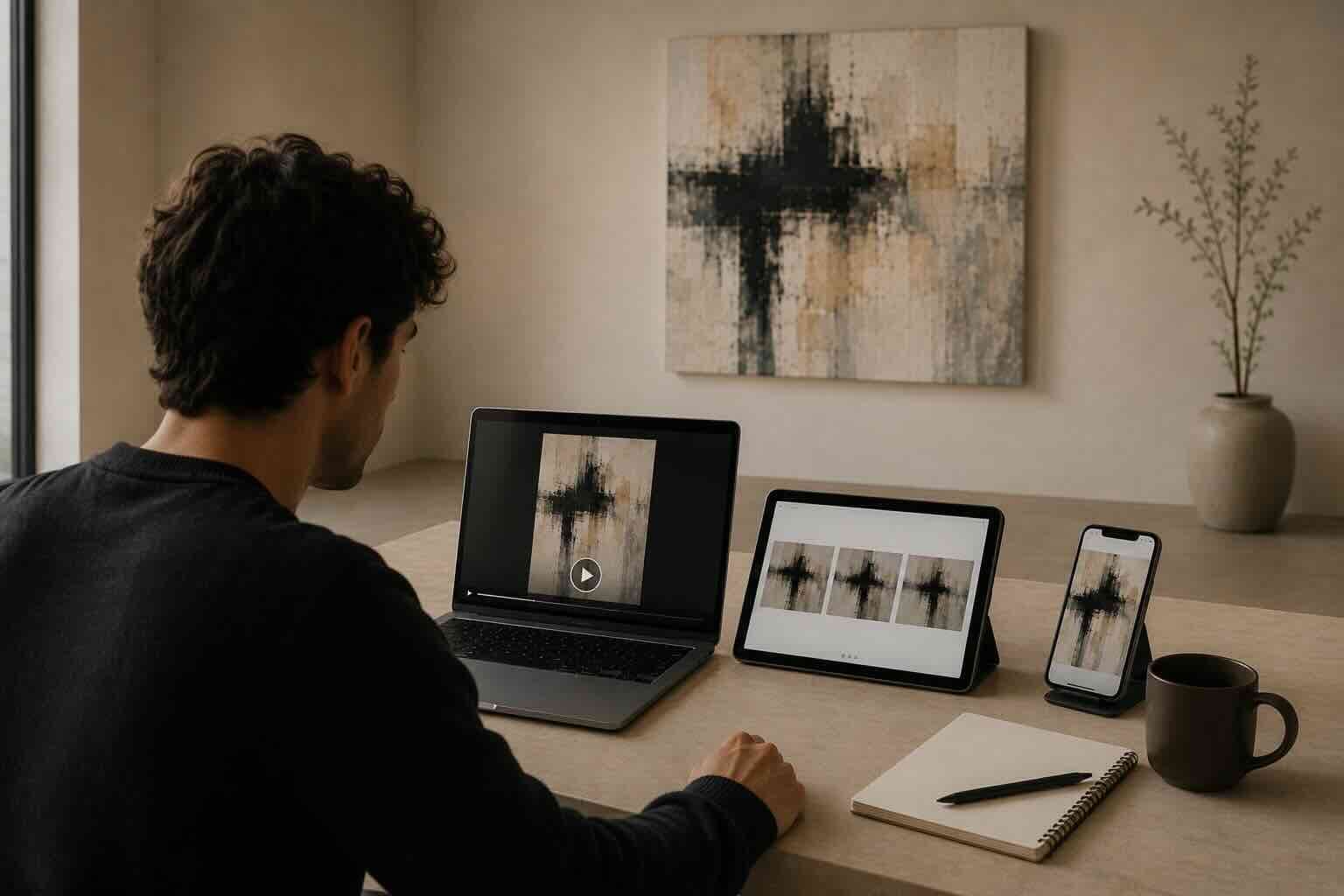
Collaborator tags, Stories stickers for RSVP, and broadcast channels for VIP lists are free PR adjacency. Boost only after a Reel earns saves or profile taps. Wyzowl's 89% trust-in-video-quality finding means a shaky walkthrough of empty crates will not convert even with spend.
For production of those Reels without a videographer, use MOCKLIO and the gallery content workflows linked above. This section assumes the files exist. Promotion without files is just a calendar invite.
What About Artsy-Adjacent and Partner Platforms?
Artsy, Artnet Newsletters, local museum calendars, city culture sites, and partner gallery cross-posts are discovery layers with collector intent. They are not replacements for your owned list. List the exhibition where your buyers already browse. Match their creative specs: often a vertical still plus short text, sometimes a video slot.
Treat paid newsletter sponsorships like Meta: strong creative first. A $10.5B online market with 59% of collectors buying digitally still uses these hubs for research. Soft install photography loses to galleries that submit room-accurate mockups of featured works when the room is not installed yet.
Pre-install promotion is the hidden use case. Shows often need PR before the truck arrives. MOCKLIO lets you market hung works in photoreal rooms while crates are in transit. That is not dishonest when labeled as preview visualization. It is how remote collectors decide to fly in.
Also watch how galleries market new arrivals online for ongoing inventory promo between exhibitions. New arrivals keep the same channel stack warm.
Which PR and Press Tools Still Matter?
Press kits live in Drive or Dropbox; outreach lives in your CRM or even a disciplined spreadsheet. Pitch desks want 300dpi stills, a short synopsis, dates, and a hero image that works in a CMS. Room mockups and cinematic stills from MOCKLIO beat phone photos of incomplete installs.
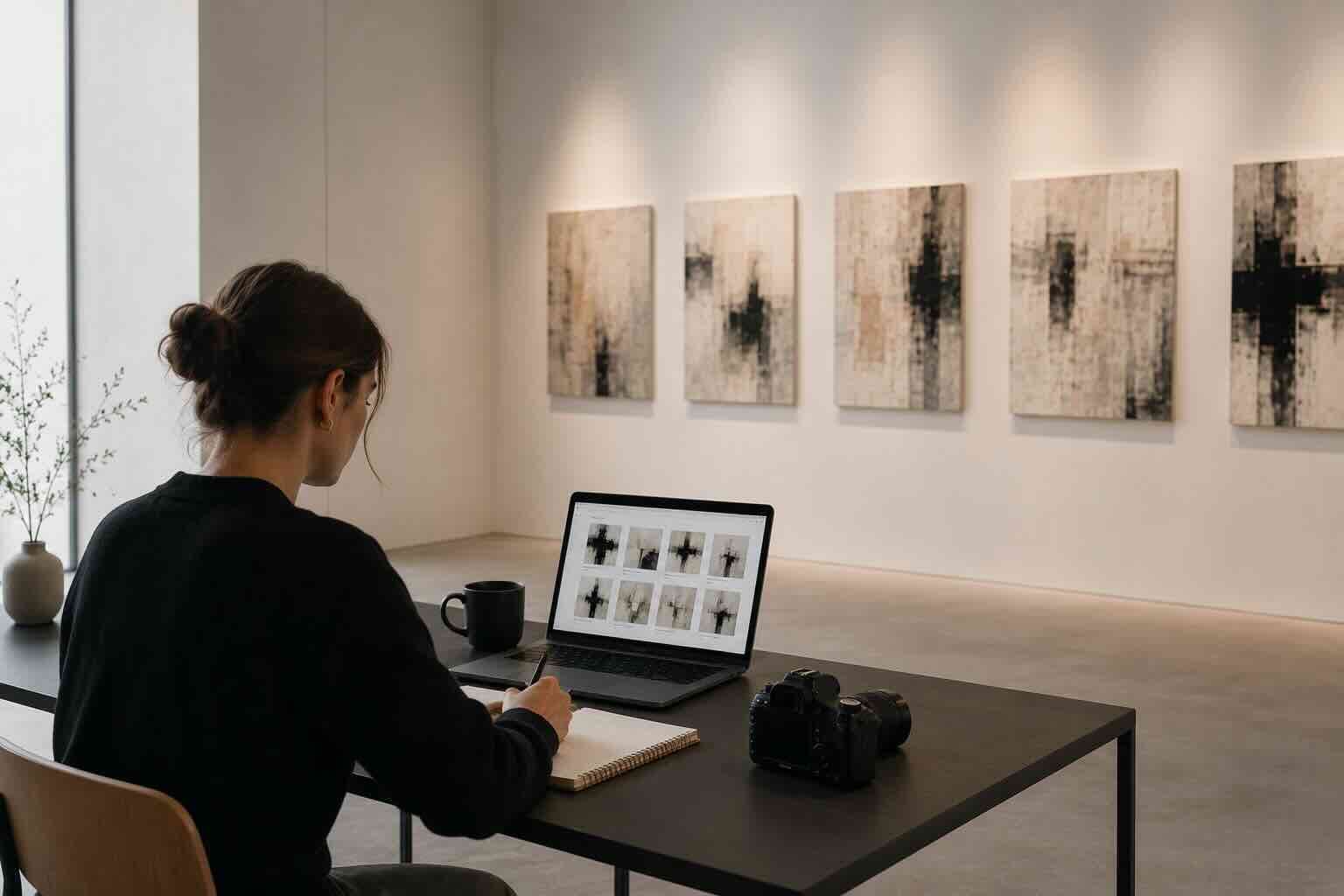
HARO-style journalist request tools and local arts reporters still move needle for mid-size cities. National press is lottery tickets. Local calendar listings are free infrastructure. Put them on the checklist beside Meta and email, not below "maybe later."
Influencer gifting is optional and often noisy. If you go there, brief creators with the same reel and caption facts you use in ads. Fragmented creative confuses collectors who see three different rooms for one show.
Where Does MOCKLIO Sit If It Is Not a Media-Buying Tool?
MOCKLIO is the visual supply chain for every channel above. Upload works, stage rooms, export stills and cinematic reels, pull carousel and captions, push select assets to portfolio or partner listings. Meta, email, Artsy-adjacent platforms, and press kits consume those files. Without them, promotion tools only amplify emptiness.
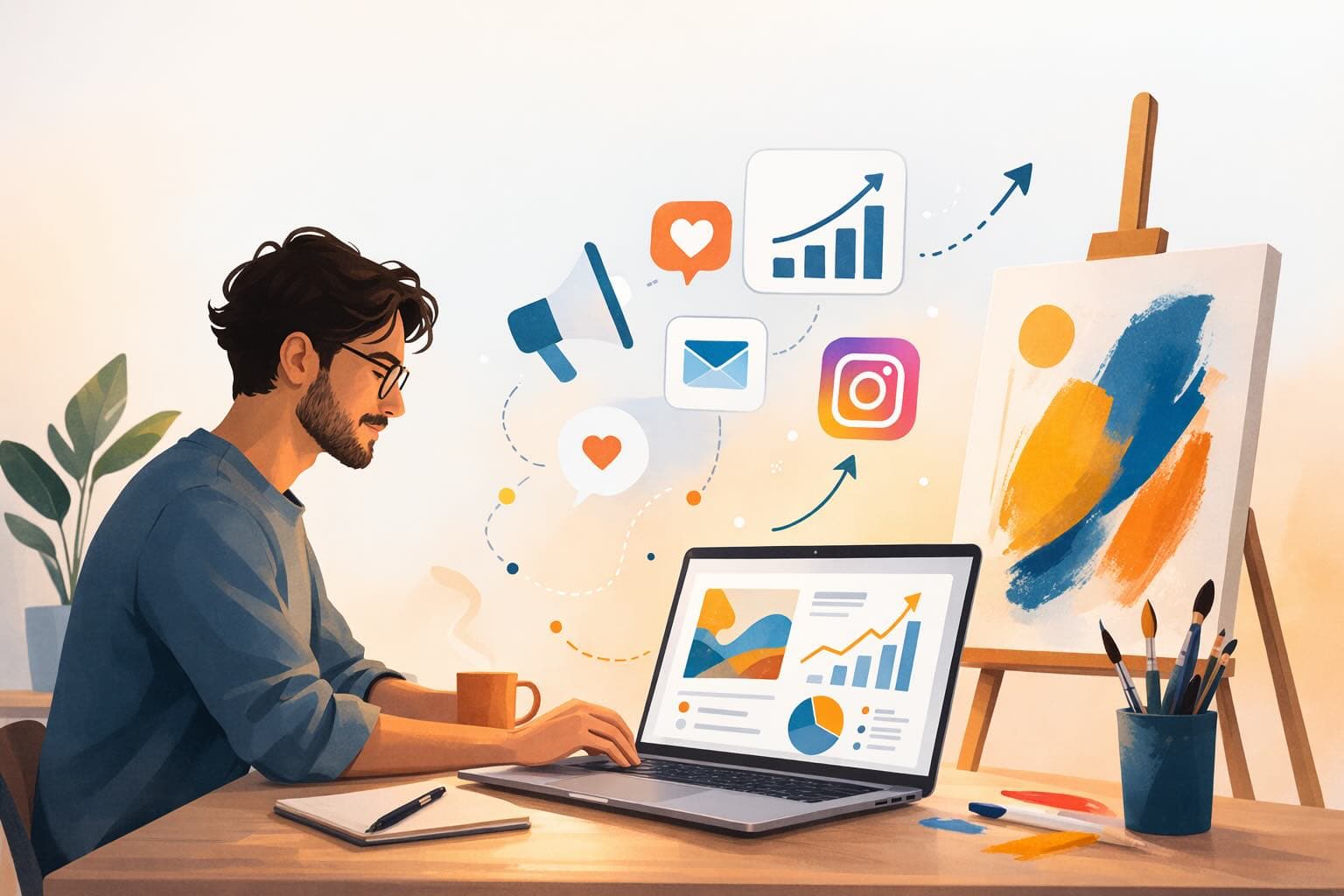
For 50-work shows, batch production cost and time dominate. See cost to produce Instagram Reels for a 50-work exhibition. Then bring those files into the paid/PR stack in this article. Two documents, one pipeline.
Artists self-promoting a solo show use the same split: MOCKLIO for assets, Meta + Instagram + email for promotion, portfolio inquiry for close. You do not need a gallery CRM to start. You need coherent creative and one RSVP link.
Budget order of operations: produce visuals, schedule organic Reels and email, list on partner platforms, then put paid behind the creative that already earned saves. Reversing that order is how exhibition advertising gets a bad reputation. The tools are fine. The sequence is what breaks.
FAQ: Tools to Promote Art Exhibitions Online
What is the best platform for art gallery advertising in 2026?
Meta Ads for paid reach, Instagram for organic exhibition narrative, email for VIPs, and Artsy-adjacent or local culture platforms for intent traffic. No single platform replaces the stack.
Should I spend on ads before the show is installed?
Yes, if creative is ready. Use photoreal room previews of featured works, labeled as preview, so remote collectors can decide early. Waiting for install photos often means launching ads too late.
Is this the same as a gallery content pack guide?
No. Content packs cover how to produce reels, stills, and captions. This guide covers where to promote: Meta, email, Instagram, partner platforms, and press. Use both.
Do Reels still matter for exhibition attendance?
Yes. ~200B daily plays and Buffer's +125% reach vs single images make Reels the discovery layer. Carousels (~1.92% engagement) carry dates and logistics afterward.
How does MOCKLIO help exhibition advertising specifically?
It supplies hi-res stills and cinematic reels that meet the visual bar buyers expect (93% say visuals matter; Wyzowl 89% trust video quality). Better creative makes every promotion tool cheaper per RSVP.
Buy Attention Only After You Build the Visuals
Exhibition promotion in 2026 is a channel stack, not a single app. Meta, email, Instagram, Artsy-adjacent platforms, and press kits move attendance when the creative is room-true and video-capable. Soft installs are not a media plan.
Produce the pack in MOCKLIO, then spend where collectors already look. That is how contemporary shows compete with everything else fighting for the same Friday night.
- Basti, MOCKLIO