What Makes a Good Artist Portfolio in 2026 (Checklist)
Last updated: November 12, 2026
What makes a good artist portfolio: room context, embedded cinematic video, mobile + web layout, and a clear CTA. Build in ~1 minute with MOCKLIO AI or templates.
Posted by
 Sebastian Kluger
Related reading
Short-Form Video Ads for Artists: Hooks and Scripts
Plan Reels and TikTok-style ads for art: 2-second hooks, room mockup reveals, offers, CTAs, UGC vs polished, and three example scripts.
Best Platforms for Art Gallery Advertising (2026)
Compare Meta, Google, Pinterest, marketplaces, newsletters, and local ads for galleries, plus how to make ad creatives without a videographer.
How Artists Run Promotional Campaigns Without a Marketing Team (2026)
Run art promotional campaigns solo: calendar, stills, Reels, captions, portfolio CTAs. The 2026 stack that replaces a marketing team for indie artists.
Short answer: A good artist portfolio in 2026 proves scale, looks sharp on phone and desktop, embeds motion where stills stall, and ends in one clear inquiry path. Build it in about a minute with MOCKLIO AI or a template, drop cinematic room videos onto the page, and publish a link that works anywhere a buyer opens it.

Most "portfolio" advice still sounds like 2014: pick ten jpegs, write a bio, hope a gallerist clicks. In 2024 about 59% of collectors bought art online (Art Basel and UBS Survey of Global Collecting). Those buyers judge you on a phone in a coffee line, not a printed leave-behind. Presentation is the product.
Visuals drive purchase decisions for experience goods. Research commonly puts visual influence near 93%. Landing pages with video often convert far better than static-only pages, with lifts cited around 80% to 86% (DigitalApplied, video marketing statistics 2026). Industry surveys such as Wyzowl find most people say video quality builds trust. A good portfolio is not a dump of files. It is a responsive sales room that works the first time someone opens your bio link.
When we designed MOCKLIO portfolios, the brief was selfish: I wanted a site live in about a minute, with the same cinematic room reels already sitting in my library, looking correct on mobile without a second layout pass. Templates and AI generate get you there. Manual polish stays optional, not required.
Key takeaways
- Good = context (room stills) + motion (embedded video) + one CTA.
- Must look right on mobile first; desktop polish is not enough.
- MOCKLIO: AI generate or templates in ~1 minute; videos embed directly.
- Distinct from our conversion playbook: this is the quality bar, not pricing theory.
What Makes a Good Artist Portfolio in 2026?
A good artist portfolio answers five questions before the visitor scrolls away: Is this work real and at a believable size? Does it fit my taste? Would it look right in a home, not a white void? Can I contact you without hunting? Will this page still look intentional if I open it on my phone?
Archives fail those tests. They show files. Selling portfolios show hangs. Flat studio crops ask the buyer to invent a wall, lighting, and scale. Room mockups and cinematic reels do that work for them. That difference is why mockup-led artists in our cohort often see roughly 2-3x better engagement versus white-background grids.
For the full “turn visitors into inquiries” structure (pricing placement, shop path, deal flow), see Art Portfolio That Converts. This piece is the quality checklist: what “good” looks like before you argue about funnel math.
The Quality Checklist: Context, Motion, Clarity, Speed
Use this as a pass/fail before you ship a link in your Instagram bio.
- Context: At least one photoreal room still per featured piece so scale is obvious.
- Motion: At least one embedded cinematic room video on the homepage or piece page (not a YouTube tab scavenger hunt).
- Clarity: Name, medium, size, and a single inquire or buy path above the fold on mobile.
- Responsive: Hero, galleries, and video play cleanly on a phone without sideways scroll or tiny tap targets.
- Speed to ship: You can publish an update the same day a piece finishes, not after a week of Webflow wrestling.
Fail any two and collectors bounce. They will not email you to ask for a better layout. They will open the next artist's link.
Why Room Context and Embedded Video Belong on the Portfolio
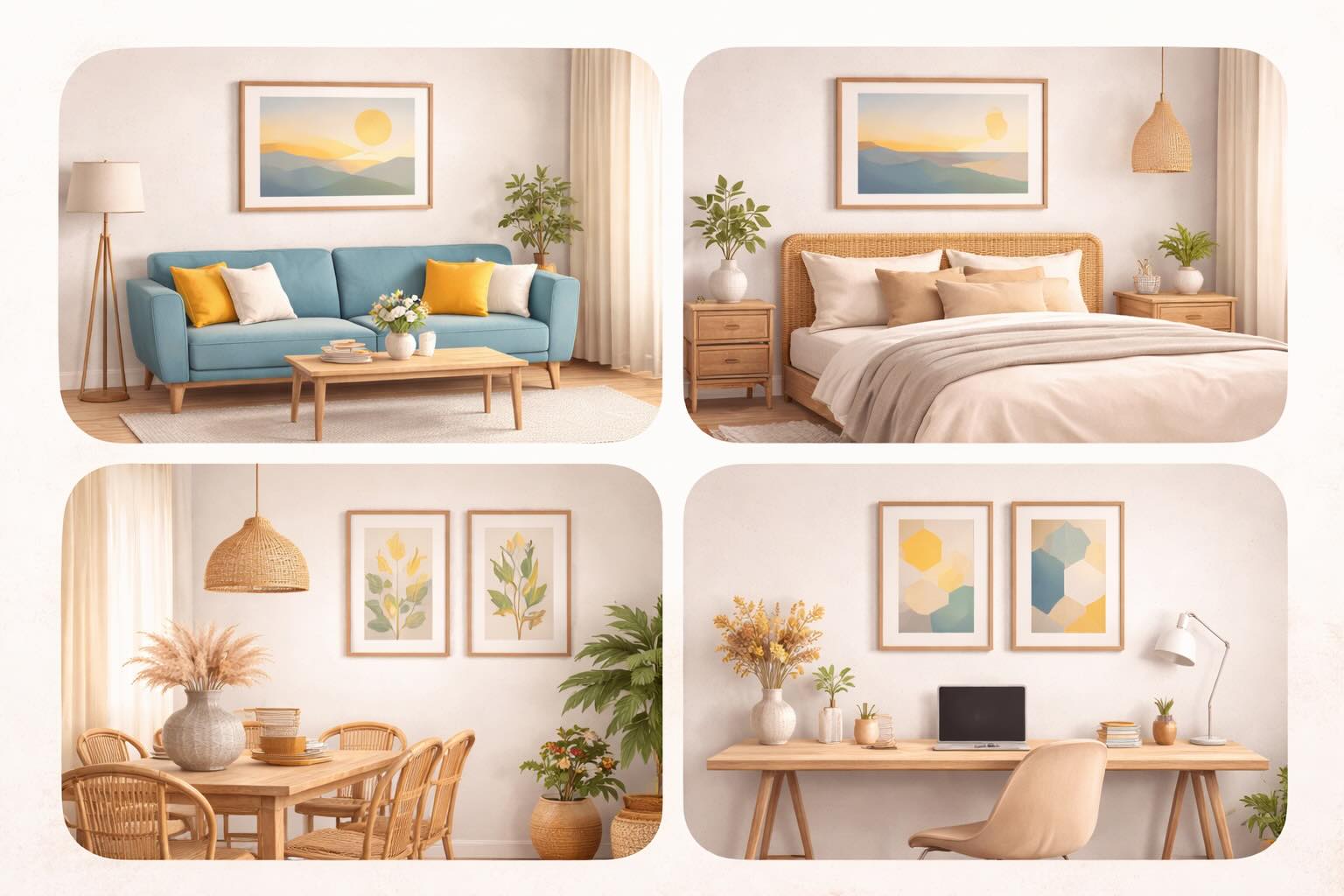
Endowment starts when a viewer imagines ownership. A painting on a sofa wall feels closer to “mine” than a floating jpeg. That is why interior-context images outperform empty backgrounds for wall art. Video adds time on page and trust: Wyzowl-style industry surveys routinely report that most people say video quality raises brand credibility (often near 89%).
The portfolio mistake is separating channels. Artists post a Reel, then link to a Squarespace grid of stills that never show the same hang. Buyers lose the story. MOCKLIO closes that gap: generate the cinematic room video once, then place it directly on the portfolio page next to the still. Same upload path. Same room. No CapCut export into a random embed that breaks on iOS Safari.
Instagram Reels still matter for discovery (Meta surfaces short video hard; Buffer's large-sample work put Reels well ahead of single images on reach, see Buffer Instagram statistics). The portfolio is where that attention should land. If the bio link cannot play the same motion you used to win the stop, you paid for traffic and then demoted the product.
Mobile and Web: One Portfolio That Always Looks Good
Most art buyers will open your link on a phone. Desktop is for the minority who forward to a partner or print a lookbook. A good artist portfolio is designed mobile-first: type scales, galleries stack, videos do not crop into letterbox accidents, and the inquire button stays thumb-reachable.
“Looks fine on my laptop” is not a quality bar. Open your own URL in airplane mode on a mid phone. If the hero feels cramped, the video autoplay fails silently, or the contact form is below three screens of bio poetry, fix the template before you chase more followers.
MOCKLIO portfolios are built to stay coherent on web view and mobile view without a second theme. You pick a template (or let AI assemble one), add work, and publish. Layout rules already favor readable type, gallery rhythm, and embedded reels that do not fight the viewport. That is the difference between a CMS you fight and a sales page that ships.
How to Build a Good Portfolio in About One Minute
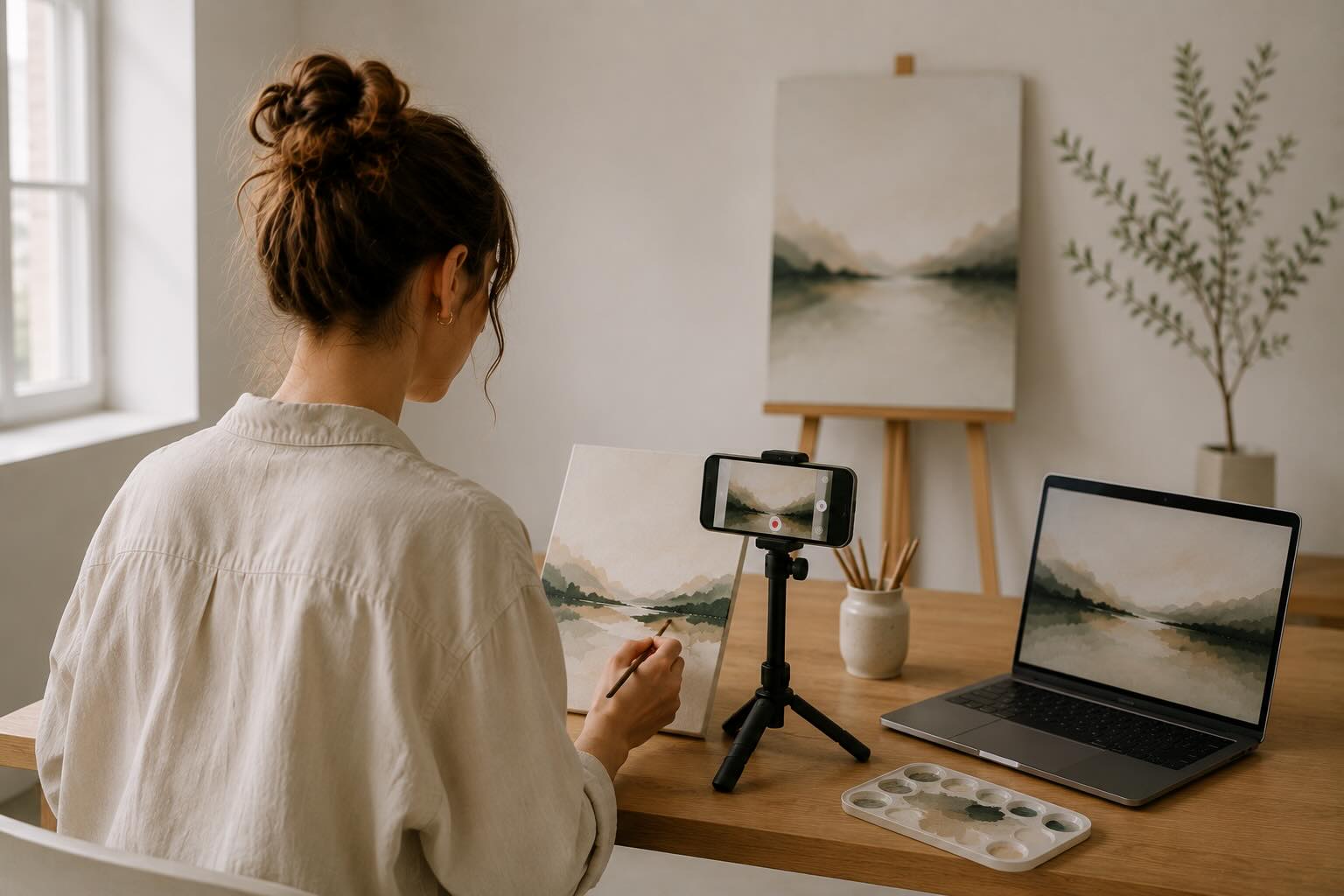
Speed is a quality feature when it removes excuses. MOCKLIO gives two create paths:
- AI generate: Answer a short intake, attach media, get an unpublished draft assembled for you. Edit what you hate. Publish when it is ready.
- Templates: Pick from options like elegant, contemporary, pop-art, editorial, brutalist, or atelier. Drop in room stills and cinematic videos you already made. Publish.
Either path can get a credible first version live in about a minute of decisions, not a weekend of builder tutorials. Then you iterate: swap a hero reel, reorder galleries, tighten copy. The point of AI and templates is not “set and forget forever.” It is “stop delaying the bio link because the site is unfinished.”
Public URL shape is simple: https://yourname.mockl.io (or the path fallback). One shareable address for Instagram, email signatures, fair applications, and collector DMs. That single URL is what “good” operationally means for most mid-range artists.
Integrate MOCKLIO Videos Directly (Do Not Break the Chain)
If you generate cinematic room reels in MOCKLIO and then host them elsewhere with a weak player, you cut the value of that cinematic video. Keep video native to the portfolio whenever you can. Buyers who arrived from a Reel should feel continuity: same room, same piece, same motion language, now with size notes and an inquire CTA.
Practical stack for one artwork:
- Upload the file, pick a room, export a front-view still and a ~10-second cinematic video (optional longer ~12.5-second cinematic cut for slower pages).
- Add both to the portfolio section for that work.
- Post the reel for discovery; point the bio to the portfolio page that embeds it.
- Keep inquiries on-page so DMs do not become your CRM.
That loop is why MOCKLIO is the solution for artists who want presentation and publishing in one system instead of Canva plus Squarespace plus Drive plus “I'll film it later.”
Common Portfolio Fails (Even With Nice Work)
Strong paintings still lose sales when the site fails basics. Watch for these:
- White-background only grids with no room proof.
- Video buried on Instagram while the portfolio is still-only.
- Desktop-only designs that collapse on mobile.
- Six competing CTAs (email, Instagram, Patreon, shop, newsletter, “book a call”).
- Months between updates because the builder is too heavy.
For high-ticket specific traps (risk, scope, next steps), read Portfolio Mistakes That Kill High-Ticket Sales. Fix those after the quality bar above is green.
FAQ: What Makes a Good Artist Portfolio?
How long should it take to create an artist portfolio?
A credible first version can ship in about a minute with MOCKLIO AI generate or a template, then improve over the week. Multi-day website builds are a process smell, not a quality signal.
Do I need video on my artist portfolio?
Yes if you sell wall work online. Pages with video routinely convert better than static-only pages (often cited near 80% to 86% lifts). Embed the same cinematic room reel you use for Reels so discovery and the landing page match.
Should my portfolio work on mobile?
Always. Most collectors open bio links on phones. MOCKLIO portfolios are optimized for web and mobile so the page stays intentional either way.
AI portfolio vs manual template: which is better?
Use AI when you want a draft assembled fast from your intake and media. Use a manual template when you already know the aesthetic. Both are valid MOCKLIO paths; polish after publish, not before.
Is this the same as the “portfolio that converts” guide?
No. That guide covers conversion structure and inquiry paths. This guide defines what “good” means: context, embedded video, responsive layout, and speed to ship with MOCKLIO.
Ship the Portfolio Buyers Can Trust on Any Screen
A good artist portfolio is a responsive room for your work: photoreal context, embedded cinematic video, one clear next step, and a layout that survives mobile. MOCKLIO is built for that job: AI or templates in about a minute, videos integrated on the page, web and mobile optimized so buyers see the same quality wherever they open the link.
Stop waiting for a “real website.” Publish the sales page, then improve it while the bio traffic is already landing.
- Basti, MOCKLIO