Art Mockup Generator Showdown: Why Cinema-Quality 3D Renders Beat Photoshop Every Time
You spend weeks on the canvas. Buyers spend three seconds deciding whether to scroll past. The difference between those outcomes? Context. Discover why cinema-quality 3D renders outperform Photoshop for art presentation.
Posted by
Related reading
Smartist vs MOCKLIO: Which Art Mockup Tool is Right for You? (2025 Comparison)
Compare Smartist and MOCKLIO to find the perfect art mockup tool. Discover which platform offers video renders, better pricing, iOS support, customization options, and fits your workflow in this detailed 2025 comparison.
Canvy vs MOCKLIO: Which Art Mockup Tool Should You Choose? (2025 Guide)
Compare Canvy and MOCKLIO to find the best art mockup tool for your needs. Discover which platform offers video renders, better pricing, customization options, and fits your workflow in this comprehensive 2025 comparison guide.
Art Mockups vs Real Photography: Which Actually sells more?
Should you invest $500+ in professional product photography, or are digital mockups good enough? After analyzing 500+ artist shops, the answer might surprise you. Learn which approach converts better, when each one works best, and the hybrid strategy used by successful artists who are crushing their sales.

You spend weeks on the canvas. Buyers spend three seconds deciding whether to scroll past.
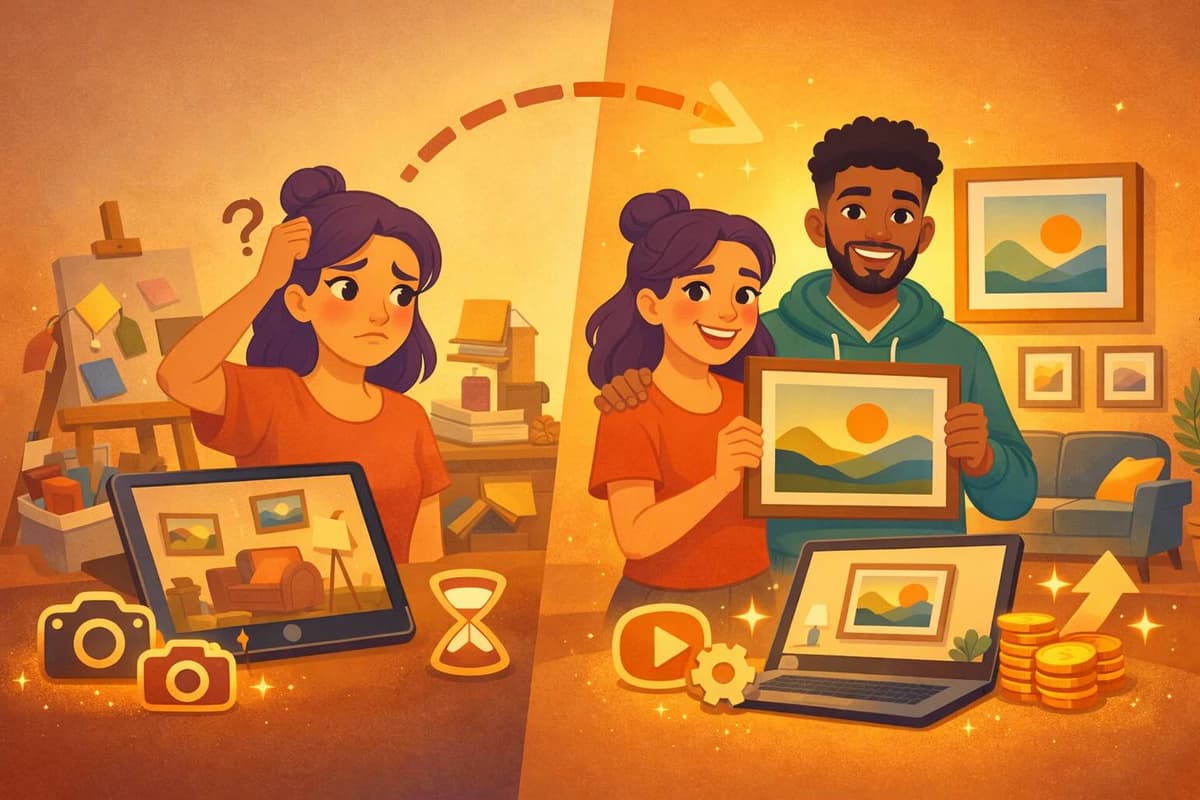
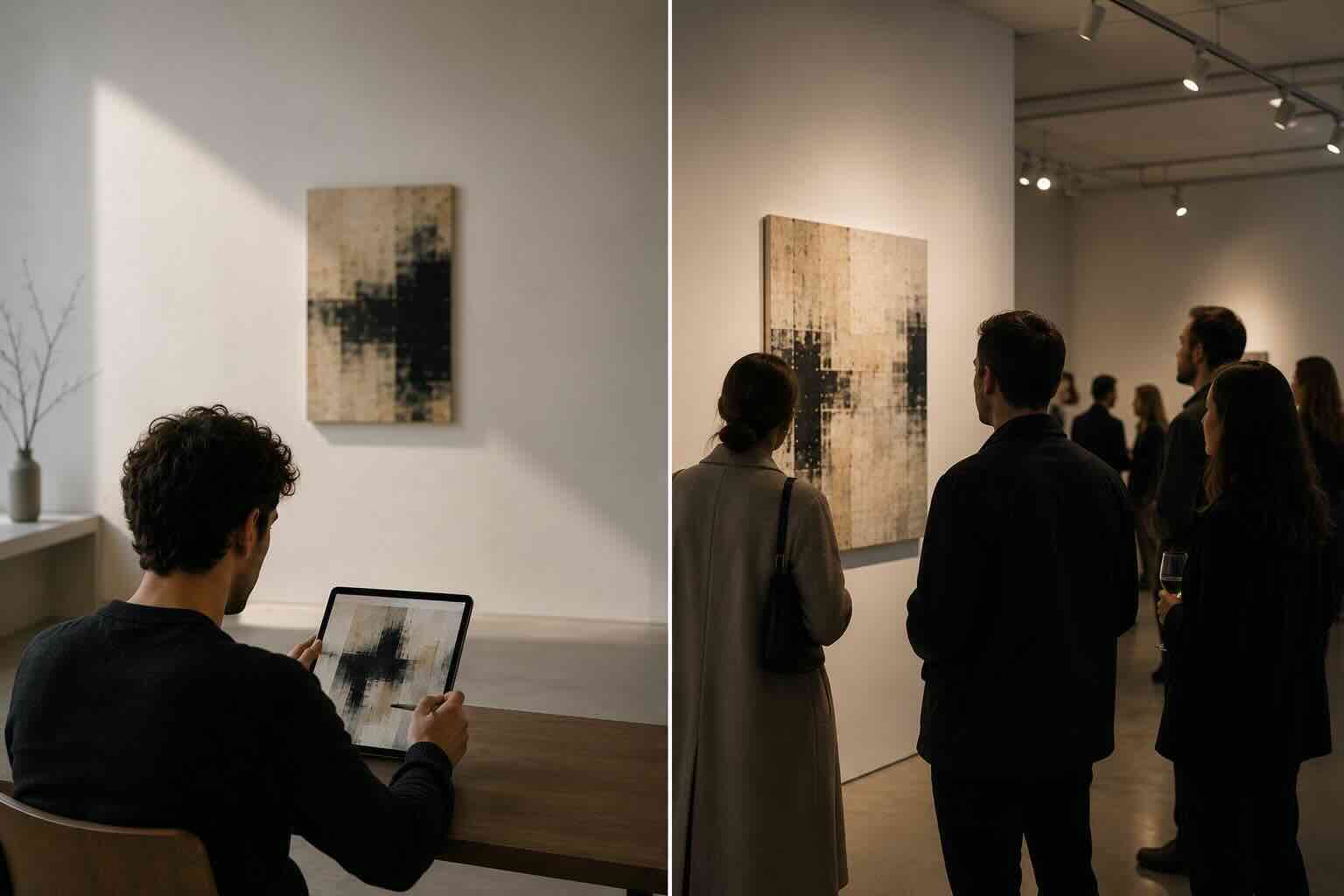
The difference between those outcomes? Context. Flat photos on white backgrounds don't sell art—they kill conversion before buyers even consider price. Research confirms art displayed in realistic room settings generates 3x more engagement and 2-3x better conversion than isolated product shots.
Professional photographers charge $500+ per session. Photoshop demands weeks of learning curve. Generic mockup tools paste your work onto fake walls with zero depth or lighting physics.
Artists need a third option. One that delivers cinema-quality results without expensive shoots or design skills.
The Art Mockup Landscape: Three Approaches Compared
1. Professional Photography
- Cost: $500-2000 per session
- Time: 2-4 weeks (scheduling, shooting, editing)
- Quality: Excellent (if photographer understands art lighting)
- Flexibility: Zero (reshooting costs another $500+)
- Scalability: Terrible (each new piece requires new session)
Professional photography produces beautiful results. But the economics don't work for artists building online businesses. You need mockups for every piece, every room style, every seasonal campaign. One photoshoot can't deliver that range.
2. Photoshop / Manual Design Tools
- Cost: $54.99/month (Adobe subscription)
- Time: 20-40 hours learning + 2-4 hours per mockup
- Quality: Depends entirely on skill level
- Flexibility: High (if you master the software)
- Scalability: Poor (time investment per mockup stays constant)
Photoshop gives control. But control demands expertise. Most artists don't want to become graphic designers—they want to ship mockups and return to creating. The tool is powerful. The learning curve murders momentum.
3. 3D Mockup Generators (MOCKLIO)
- Cost: Free for images, $9 per video render
- Time: 60 seconds per mockup
- Quality: Cinema-grade (ray-traced lighting, realistic depth)
- Scalability: Perfect (unlimited free mockups)
3D generators automate what Photoshop users do manually. Choose room. Upload art. Download mockup. The physics engine handles lighting, shadows, reflections, and perspective. No design skills required. No expensive reshoots. No time waste.
Why Ray-Traced Rendering Changes Everything
Generic mockup tools paste your artwork onto a wall texture. The result looks flat because it is flat—there's no light interaction, no shadow depth, no realistic integration.
MOCKLIO video engine uses ray-traced rendering: the same technology Hollywood VFX studios use for photorealistic CGI. Light rays simulate real-world physics. Your art casts appropriate shadows. Reflections appear naturally. The frame interacts with the room's ambient lighting.
Buyers subconsciously register this realism. The mockup doesn't trigger "this looks fake" skepticism. It answers their core question: "How would this look in my space?" "How would this look from different perspectives?"
That psychological shift drives conversion.
The Feature Breakdown: What Actually Matters
Scene Library Quality
Generic Tools: 1000+ cluttered templates designed for everything (logos, phones, business cards). Overwhelming. Mostly irrelevant to art.
MOCKLIO: Curated interiors designed specifically for showcasing art. Minimalist galleries. Modern lofts. Cozy bedrooms. Boho living rooms. Quality over quantity. New scenes added monthly. Each one professionally designed to make art look premium.
Lighting & Physics
Generic Tools: Flat paste job. Zero light physics. Obvious fakeness.
MOCKLIO: Ray-traced lighting engine. Realistic shadows. Natural reflections. Depth of field. Motion. Your art integrates into the scene with actual physics and different camera perspectives. The difference is immediately visible. Buyers feel it even if they can't articulate why.
Video Renders
Generic Tools: None. Maybe a basic zoom/pan if you're lucky.
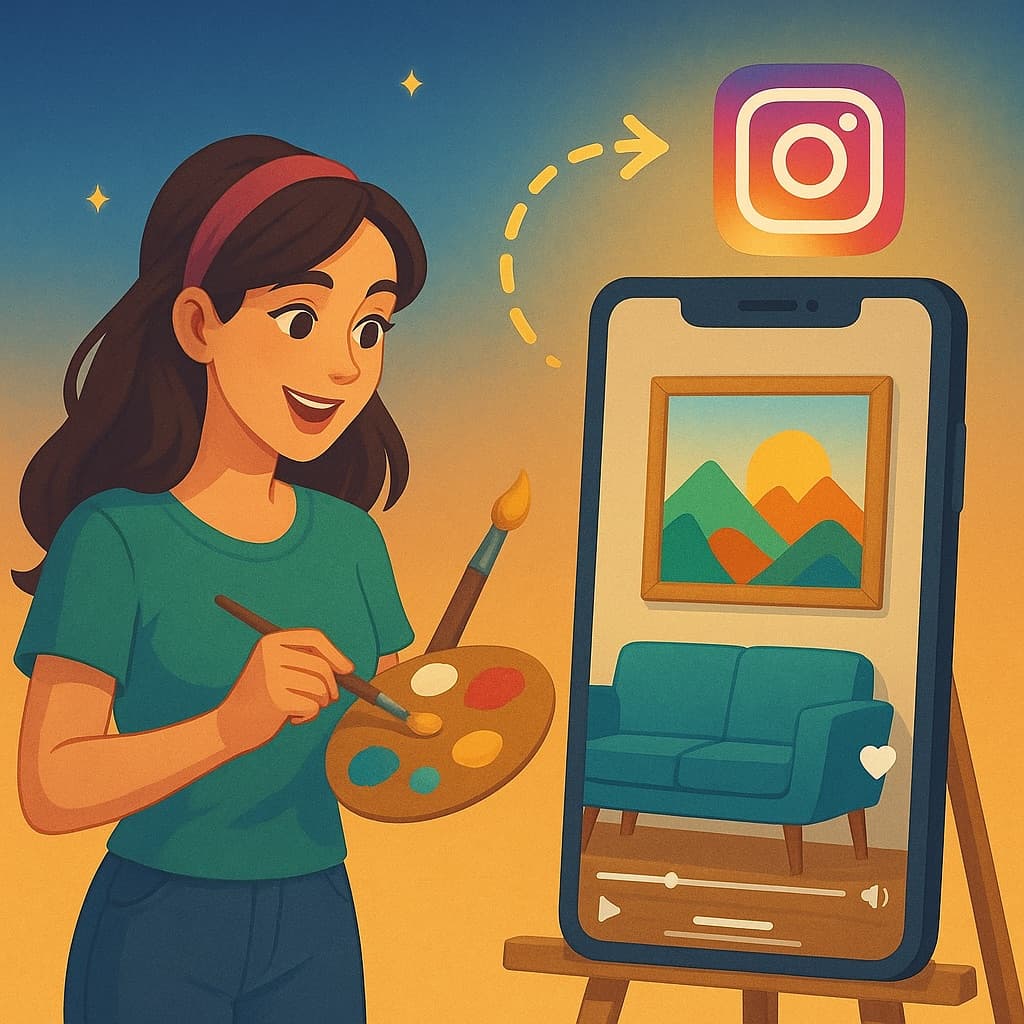
MOCKLIO: Cinema-quality 3D video renders. Camera movement through the space. Dynamic lighting shifts. Your art showcased like a gallery walkthrough. Perfect for Instagram Reels, product launches, website hero sections. A professional 3D artist would charge $1,800+ for equivalent work. MOCKLIO delivers in 24 hours for $9.
Speed & Workflow
Generic Tools: Slow interface. Clunky uploads. Export delays.
MOCKLIO: 60-second workflow. Drag art. Done. Zero friction between idea and execution. Speed matters when you're launching a new collection or testing different room contexts.
The Real Cost Comparison
Let's calculate what professional presentation costs over one year.
Professional Photography Route:
4 shoots per year (seasonal collections) × $700 average = $2,800
Plus: scheduling headaches, location constraints, weather delays
Photoshop Route:
- Adobe subscription: $660/year
- Learning time: 30 hours × $50/hour opportunity cost = $1,500
- Ongoing time: 3 hours per mockup × 40 mockups = 120 hours × $50 = $6,000
- Total: $8,160 (plus massive time sink)
MOCKLIO Route:
- Image mockups: Free (unlimited)
- Video renders: 10 per year × $9 = $90
- Total: $90
The math is brutal. You either pay thousands in cash and time, or you leverage automation and focus on creating.
When Photoshop Makes Sense (The Honest Truth)
Photoshop wins in specific scenarios:
- You're already expert-level proficient (100+ hours invested)
- You need pixel-perfect custom edits beyond room placement
- You're creating marketing materials that extend beyond art mockups
- You have unlimited time and enjoy the design process
For 95% of artists, those conditions don't apply. You want professional mockups fast so you can return to your actual craft. MOCKLIO handles the mockups. You handle the art.
The Strategic Advantage: Testing & Iteration
Here's what speed unlocks: experimentation.
When mockup creation takes 60 seconds, you can test:
- Which room styles convert best for your art genre
- How different wall colors affect buyer perception
- Whether minimalist or decorated scenes perform better
- What video angles generate the most engagement
Professional shoots can't deliver that iteration speed. You're locked into whatever you captured. Photoshop can iterate, but time cost limits testing volume. MOCKLIO removes the constraint. Test aggressively. Let data guide your presentation strategy.
The Bottom Line
Professional photography is expensive and inflexible. Photoshop is powerful but demands expertise most artists don't want to build. Generic mockup tools produce obviously fake results.
MOCKLIO delivers cinema-quality mockups in 60 seconds. Free forever for images. $9 for Hollywood-grade video renders.
Choose your scene. Upload your art. Download your mockup.
The execution is automatic. The results are professional. The time saved returns to your craft.
Your art deserves presentation that matches its quality. Stop compromising. Use the tool built specifically for how art actually sells.